
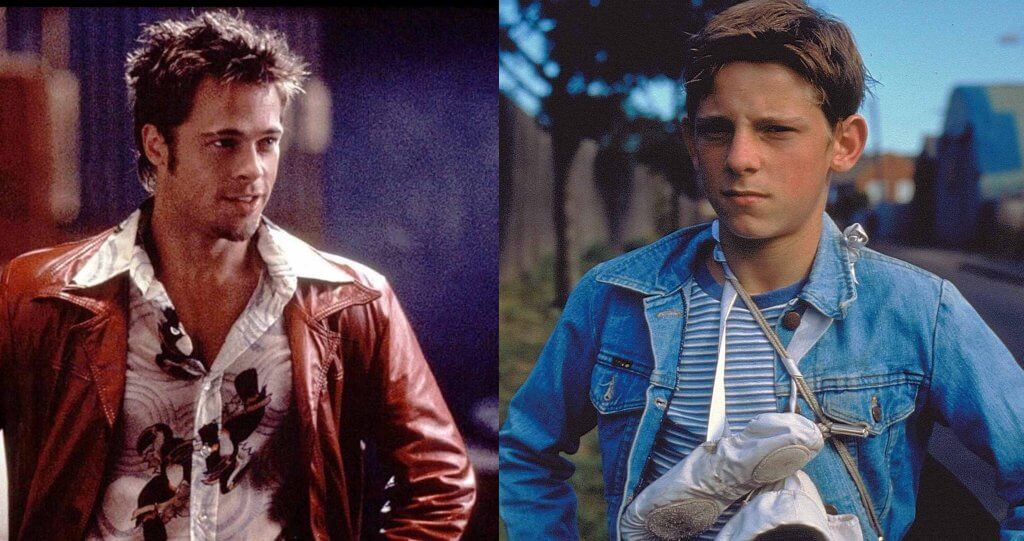
Billy Elliot (2000), dir. Stephen Daldry. © Universal Pictures.
Growing up, I always thought Tyler Durden was so cool, with his careless attitude, and I still kind of do.
There is something so seductive about his philosophy in Fight Club. He doesn’t seem scared of anything. He can get punched in the face and laugh. He doesn’t care about money, status, possessions or what anyone thinks of him. Most importantly, Tyler makes rejection much less powerful, because how much can someone reject you when you’ve already decided you don’t need them?
I’ve been thinking about this recently because, weirdly, Billy Elliot might be the perfect film to put next to Fight Club. Both films are about masculinity and men feeling trapped by what they’re supposed to be, but they go in completely different directions to deal with that pressure. Tyler’s answer is to become tougher. Billy’s is to allow himself to be vulnerable. And I think Billy is the braver of the two.
Tyler’s way
There are some parts of Tyler’s philosophy that I genuinely like. Don’t let other people’s approval determine your worth. Be willing to lose. Stop desperately trying to protect yourself from embarrassment, failure and rejection.
If I apply for something and get rejected, I want some Tyler Durden in me. Fine. Take the loss and keep moving.
But Tyler goes further than being able to take a loss. His philosophy is about rejecting the things that have power over him in the first place: possessions, status, comfort, social expectations and, to some extent, attachment to other people. If you reject those things first, there’s less left for the world to take away from you.
That’s where I start to struggle with Tyler’s philosophy. There’s a difference between being able to lose something and trying not to need anything in the first place.
Then there’s Billy
Billy Elliot is almost the opposite. Billy cares a lot. He cares about dancing, he cares what his dad thinks, and he cares about his family. None of this is particularly comfortable for him. Dancing puts him at odds with almost every idea of masculinity he has grown up around, and he doesn’t get to escape that tension by deciding none of those people matter.
He isn’t protected from rejection. He walks straight towards the possibility of it.
What happens when you actually live like this?
Tyler’s philosophy is incredibly attractive when you’re scared of rejection. If a job doesn’t want you, fuck them. If somebody leaves, you didn’t need them anyway. If something you’ve made fails, who cares? There is genuine usefulness in being able to take a loss without collapsing.
I think that’s ultimately why Billy is braver. Whilst Tyler teaches you to move on from loss and not dwell on it, Billy teaches you to care enough to risk a loss because the alternative is protecting yourself so well that you start cutting yourself off from the things you actually want.